Timocracy is defined as: "Rule by men of merit. The only inhibitant to high office would be incompetence; no matter his/her wealth or blood lines."
Is it possibly time for a clear definition of the qualifications for high office? Contrary to the views of Governor Palin, we do not need persons of average intelligence and average abilities to continue to be elected to high office, because of "star power".
Thursday, October 28, 2010


Love of Country
"To love one's country, unless the love is quite blind and lazy, must involve a distinction between the country's actual condition and its inherent ideal..."

George Santayana (1863-1952) American/British philosopher, and recognized as one of the great thinkers of the 20th century.

George Santayana (1863-1952) American/British philosopher, and recognized as one of the great thinkers of the 20th century.
Tuesday, October 19, 2010
prayer
"...the prayer which a fine lass...addressed to the Madonna; 'Holy Mother of God, who conceived without sinning, grant me the grace of sinning without conceiving."

Anatole France, Nobel Prize in Literature, 1921.

Anatole France, Nobel Prize in Literature, 1921.
Lifelong Learning
"Real education comes after we leave school; and there is no reason why it should stop before our death".

John Dewey

John Dewey
Parasites
"One may of course live in a country parasitically accepting all the benefits for which others have sacrificed--both in the past and in the present--while rejecting any notion of being obliged to do the same."

Thomas Sowell, "Intellectuals and Society"
parasite is defined as: "One who habitually takes advantage of the generosity of others without making any useful return."
American Heritage Dictionary
It would truly be a wasted life, if, at the end of that life all anyone can say is, "he/she took up space for a while."

Thomas Sowell, "Intellectuals and Society"
parasite is defined as: "One who habitually takes advantage of the generosity of others without making any useful return."
American Heritage Dictionary
It would truly be a wasted life, if, at the end of that life all anyone can say is, "he/she took up space for a while."
Friday, October 15, 2010
Equal?

"Men are by nature unequal; and he who seeks equality between unequals seeks an absurdity."
Spinoza
Thursday, October 14, 2010
Something to Think About
The damage a bad education causes is like a pervasive infection and can linger for years, diminishing the rest of the life of the "exposed" student.
Wednesday, October 13, 2010

Tuesday, October 12, 2010
Reading and Writing
"How does one get to be a writer? The first two requirements are these: to read insatiably, and to write incessantly" James Kilpatrick, THE WRITER'S ART.
"But if we ourselves would be read, one must first read what others have written." Roscoe Ellerd, a great teacher of journalism.
I enjoy reading; it has, during my last fifty years or so, been a major passion in my life. In the last twenty years, it has been the major passion in my life. I have read hundreds, no, thousands of books on all conceivable subjects except the physical sciences and mathematics. I read little fiction, since my reading objective is not solely entertainment but also to learn. Since 1992 when I initially retired from the active practice of law until now, I have read approximately four to five books a week; at least if you consider the average book to be between three and four hundred pages (Tolstoy’s War and Peace was much more than a day). I read less than that for a few years when I returned to the practice, but resumed when I re-retired.
I still get excited about the purchase of a new book. For the last ten to fifteen years, I have generally purchased books online via Amazon and normally ordered expedited delivery so that I did not have to wait long to receive the book. It seemed like Christmas to me when the books would arrive and I could not wait to get them open. Now, however since the advent of the Sony e-book, and Amazon’s Kindle, the waiting time is down to about one minute from the time I hear of a new book, until I have purchased it and started to read. Since buying my first e-reader about three years ago, I have purchased about five hundred e-books from either Sony or Amazon. The e-readers are the best things that have happened for the lovers of reading since Gutenberg copied and improved the Korean printing process.
I have found that a book is better company than most people, and much quieter. I can read whenever I like, read on a topic that is of interest to me, and need no one else to participate in the process. I read at all hours including the middle of the night when I find I now, without explanation, awaken without the ability to return to sleep. If I do not go back to sleep it is immaterial, in fact I sometimes prefer it. It is not that I have to arise early in the morning to get to court---thankfully (or not) those days are in the past. With the e-book you can have all your current books on the bed without inconvenience or clutter (it is the size of a thin paperback), and the e-book keeps accurate track of your place in each book you are reading, thereby simplifying going from one book to another.
Writing is a completely different process for me. I am not a natural writer, or one that feels a need to write. I enjoy the mechanics of handwriting, and still use a fountain pen. In fact, I have a mini-collection of Montblanc fountain pens (about 30 or so) that I use for letter writing, note taking when reading or outlining for an anticipated article or essay I will attempt to write. I actually use cursive, and do not print, and don’t understand why so many adults print instead of write. After about the fourth grade, you had teachers quite critical of you, and you received a lower grade, if you printed---but now the teachers do not know how to write----they print. Reminds me of something I read in James Kilpatrick’s, The Writers Art, when he said, “…we now have a bunch of illiterates, trying to teach our children literacy.” Teachers always love to hear me say things like that, but when I discover that seventy-five percent of all public school teachers read less than two books per year---they have earned the criticism.
Substantively I write because I think I have something to say, but not sure that I’m the best person to be saying whatever it is---my only quasi-expertise is in the law, and so when I write on another subject I tend to spend more time than necessary doing research because of being unsure of my topic. Therefore, I tend to procrastinate: I get coffee, fill my fountain pen, make phone calls, and take a nap— all to avoid beginning a writing project.
During my high school years in a small town in western Colorado I did little (or more accurately---none) creative writing. In fact, I can’t remember a single writing project ever assigned---after all, I was a jock. What could be more important than that? In the English classes, we spent no time analyzing the style of good writers. We did not spend much time reading the books of the classic writers from the past, or of the good writers of the 20th century. After military service when I arrived at college and took English classes with students from good high school programs, and some from prep schools, I knew I was in serious trouble. My grades reflected that trouble. It was not until I got into law school that I started to gain some confidence as a writer, at least in preparing legal argument.
Now that I have my new computer, and the new “Word” program I will start to write again, but with the caveat that reading will always be more important to me than writing. So, if you notice “gaps” from time to time in my writing, be assured that I’m not watching TV, since I don’t have TV, and am pleasurably doing that most favorite thing--READING!
"But if we ourselves would be read, one must first read what others have written." Roscoe Ellerd, a great teacher of journalism.
I enjoy reading; it has, during my last fifty years or so, been a major passion in my life. In the last twenty years, it has been the major passion in my life. I have read hundreds, no, thousands of books on all conceivable subjects except the physical sciences and mathematics. I read little fiction, since my reading objective is not solely entertainment but also to learn. Since 1992 when I initially retired from the active practice of law until now, I have read approximately four to five books a week; at least if you consider the average book to be between three and four hundred pages (Tolstoy’s War and Peace was much more than a day). I read less than that for a few years when I returned to the practice, but resumed when I re-retired.
I still get excited about the purchase of a new book. For the last ten to fifteen years, I have generally purchased books online via Amazon and normally ordered expedited delivery so that I did not have to wait long to receive the book. It seemed like Christmas to me when the books would arrive and I could not wait to get them open. Now, however since the advent of the Sony e-book, and Amazon’s Kindle, the waiting time is down to about one minute from the time I hear of a new book, until I have purchased it and started to read. Since buying my first e-reader about three years ago, I have purchased about five hundred e-books from either Sony or Amazon. The e-readers are the best things that have happened for the lovers of reading since Gutenberg copied and improved the Korean printing process.
I have found that a book is better company than most people, and much quieter. I can read whenever I like, read on a topic that is of interest to me, and need no one else to participate in the process. I read at all hours including the middle of the night when I find I now, without explanation, awaken without the ability to return to sleep. If I do not go back to sleep it is immaterial, in fact I sometimes prefer it. It is not that I have to arise early in the morning to get to court---thankfully (or not) those days are in the past. With the e-book you can have all your current books on the bed without inconvenience or clutter (it is the size of a thin paperback), and the e-book keeps accurate track of your place in each book you are reading, thereby simplifying going from one book to another.
Writing is a completely different process for me. I am not a natural writer, or one that feels a need to write. I enjoy the mechanics of handwriting, and still use a fountain pen. In fact, I have a mini-collection of Montblanc fountain pens (about 30 or so) that I use for letter writing, note taking when reading or outlining for an anticipated article or essay I will attempt to write. I actually use cursive, and do not print, and don’t understand why so many adults print instead of write. After about the fourth grade, you had teachers quite critical of you, and you received a lower grade, if you printed---but now the teachers do not know how to write----they print. Reminds me of something I read in James Kilpatrick’s, The Writers Art, when he said, “…we now have a bunch of illiterates, trying to teach our children literacy.” Teachers always love to hear me say things like that, but when I discover that seventy-five percent of all public school teachers read less than two books per year---they have earned the criticism.
Substantively I write because I think I have something to say, but not sure that I’m the best person to be saying whatever it is---my only quasi-expertise is in the law, and so when I write on another subject I tend to spend more time than necessary doing research because of being unsure of my topic. Therefore, I tend to procrastinate: I get coffee, fill my fountain pen, make phone calls, and take a nap— all to avoid beginning a writing project.
During my high school years in a small town in western Colorado I did little (or more accurately---none) creative writing. In fact, I can’t remember a single writing project ever assigned---after all, I was a jock. What could be more important than that? In the English classes, we spent no time analyzing the style of good writers. We did not spend much time reading the books of the classic writers from the past, or of the good writers of the 20th century. After military service when I arrived at college and took English classes with students from good high school programs, and some from prep schools, I knew I was in serious trouble. My grades reflected that trouble. It was not until I got into law school that I started to gain some confidence as a writer, at least in preparing legal argument.
Now that I have my new computer, and the new “Word” program I will start to write again, but with the caveat that reading will always be more important to me than writing. So, if you notice “gaps” from time to time in my writing, be assured that I’m not watching TV, since I don’t have TV, and am pleasurably doing that most favorite thing--READING!
Wednesday, June 23, 2010
I Was Elected, Ergo, I Must Be Qualified
It has just been announced by the administration that General Stanley McChrystal has been fired as commander in Afghanistan, following the article in Rolling Stone in which various administrative personnel were criticized by McChrystal. I often wonder how a person who has spent his adult life in military service, with great military accomplishments to his credit, feel when fired by a person that has no military service, did all they could to avoid service, but had the power to hire and fire because they were elected or were given an executive appointment, and are therefore the "boss".
In today's world the election (almost always) or the executive appointment (frequently) has less to do with a person's qualifications for the performance of the particular job, then does the elected or appointed person's "star power", charisma or their financial support to the right people. It seems inconceivable to me that the people that voted for the current president really felt that he was, by experience and accomplishments, qualified to be the president---he was elected because his charisma was greater than his opponent. (I also had severe reservations about the qualifications of his opponent.)
I believe if you could ask every member of the United States Congress (confidentially) who among them did they consider, by reason of accomplishments, intellect, knowledge, character and preparedness for the job, most qualified to be the president, the answer would be Senator Jon Kyl of Arizona. He will, however, probably never be considered seriously for president because he lacks the element of "star power" and charisma to get the attention of the voters. Senator Kyl is one of, if not the, most respected member of the senate. Not for his TV personality but because of his job performance and knowledge of the business of the federal government--as well as possessing those traits mentioned above.
General McCrystal made the mistake of criticizing his bosses. In this day when re-election is the primary mission of all elected officials, he should have realized that his military life was greatly shortened when he spoke those critical words. He forgot the "ego" factor. The performance of his command duties quickly became secondary to that forgotten factor. (I am expressing no opinion on the quality of the General's job performance, that is above my pay grade.)
General McCrystal will, in all likihood, now follow the example of the other fired combat commander during time of war, General Douglas MacArthur, and "just fade away".
In today's world the election (almost always) or the executive appointment (frequently) has less to do with a person's qualifications for the performance of the particular job, then does the elected or appointed person's "star power", charisma or their financial support to the right people. It seems inconceivable to me that the people that voted for the current president really felt that he was, by experience and accomplishments, qualified to be the president---he was elected because his charisma was greater than his opponent. (I also had severe reservations about the qualifications of his opponent.)
I believe if you could ask every member of the United States Congress (confidentially) who among them did they consider, by reason of accomplishments, intellect, knowledge, character and preparedness for the job, most qualified to be the president, the answer would be Senator Jon Kyl of Arizona. He will, however, probably never be considered seriously for president because he lacks the element of "star power" and charisma to get the attention of the voters. Senator Kyl is one of, if not the, most respected member of the senate. Not for his TV personality but because of his job performance and knowledge of the business of the federal government--as well as possessing those traits mentioned above.
General McCrystal made the mistake of criticizing his bosses. In this day when re-election is the primary mission of all elected officials, he should have realized that his military life was greatly shortened when he spoke those critical words. He forgot the "ego" factor. The performance of his command duties quickly became secondary to that forgotten factor. (I am expressing no opinion on the quality of the General's job performance, that is above my pay grade.)
General McCrystal will, in all likihood, now follow the example of the other fired combat commander during time of war, General Douglas MacArthur, and "just fade away".
Friday, May 7, 2010
Scott Turow's-- "INNOCENT"
Scott Turow's newest book, Innocent, is a great weekend for those who enjoy courtroom dramas. It is a "continuation" of his 1987 surprise ending book, Presumed Innocent, which was made into the hit movie with Harrison Ford as the tough prosecutor, Rusty Savich. His newest offering has many of the same characters, including Sandy Stern, the classy defense lawyer, although everyone is now twenty-three years older. For those of us that have tried a case or two-- or a hundred or two cases-- in court, this is an especially enjoyable and entertaining novel from Mr. Turow, a writer that has actually been in a courtroom. I strongly recommend it to all.
Supreme Court Nomination
It is currently thought, "by those that know these things", that the President will nominate Solicitor General of the United States, Elena Kagan, as the new justice to replace the retiring Justice Stevens. It is anticipated that the nomination will occur on Monday, the 10th of May.
Monday, April 26, 2010
50 STATE IMMIGRATION LAWS?
Arizona has recently enacted their own immigration law, purportedly specifying the conditions for immigration to that state—and only that state. I have my doubts about the seriousness of the Governor’s state of mind in promoting the legislation and think she may be “nudging” the federal government to come up with a workable, comprehensive law that is practical and enforceable.
Article VI of the US Constitution provides:
Article 1 of the Constitution, which spells out Congress' powers, specifically gives U.S. lawmakers authority to establish a "uniform Rule of Naturalization" and to regulate commerce with other nations.
Strong discontent exists, especially in the southwest, over the illegal immigration from the Latin American countries, and the fifteen million illegal aliens currently in this country. In addition, there is a strong desire among the average citizen to just round them up and send them out. Most, however, have no comprehension of the complexity of that undertaking---the number of illegals, nationwide, is almost twice the total population of Los Angeles County. The federal government would have to hire tens of thousands of additional employees to administer that program at a huge cost to the taxpayers. Even then, it may not be a practical, or final, solution.
Under the Supremacy clause of the U. S. Constitution and the doctrine of preemption, it is my opinion that this state law cannot survive a constitutional confrontation; and even though there are some committed state’s right advocates on the current Supreme Court, they probably will not go this far. I suspect the Attorney General’s office of the State of Arizona told the Governor as much. The federal government is responsible for the immigration laws, and to have each state adopt their own version is just not workable. Possibly the Arizona legislators view it as a “feel good” law that may help with their re-election.
Article VI of the US Constitution provides:
“This Constitution, and the Laws of the United States which shall be made in
Pursuance thereof; and all Treaties made, or which shall be made, under the
Authority of the United States, shall be the supreme Law of the Land; and the
Judges in every State shall be bound thereby, any Thing in the Constitution or
Laws of any State to the Contrary notwithstanding”
Article 1 of the Constitution, which spells out Congress' powers, specifically gives U.S. lawmakers authority to establish a "uniform Rule of Naturalization" and to regulate commerce with other nations.
Strong discontent exists, especially in the southwest, over the illegal immigration from the Latin American countries, and the fifteen million illegal aliens currently in this country. In addition, there is a strong desire among the average citizen to just round them up and send them out. Most, however, have no comprehension of the complexity of that undertaking---the number of illegals, nationwide, is almost twice the total population of Los Angeles County. The federal government would have to hire tens of thousands of additional employees to administer that program at a huge cost to the taxpayers. Even then, it may not be a practical, or final, solution.
Under the Supremacy clause of the U. S. Constitution and the doctrine of preemption, it is my opinion that this state law cannot survive a constitutional confrontation; and even though there are some committed state’s right advocates on the current Supreme Court, they probably will not go this far. I suspect the Attorney General’s office of the State of Arizona told the Governor as much. The federal government is responsible for the immigration laws, and to have each state adopt their own version is just not workable. Possibly the Arizona legislators view it as a “feel good” law that may help with their re-election.
Friday, April 23, 2010
Supreme Court selection preview
In the coming weeks the President will decide on his nominee to replace (physically) the retiring Justice Stevens, the only justice that is a protestant, and did not graduate from an Ivy League (meaning primarily Harvard and Yale) University. Other than Justice Sotomayor's trial work with the district attorneys office in New York, I can find no record in the biographies of the other justice's to suggest that any of them have ever tried, as a lawyer, a jury trial, or represented an "individual" client; although they have all served as appellate court jurists.
It seems time to try to break the "cookie cutter".
I will have much more to say when the "field" is narrowed.
It seems time to try to break the "cookie cutter".
I will have much more to say when the "field" is narrowed.
Sunday, April 4, 2010
LAWYERS AND CHEERIOS
I am a great believer in the first amendment to the United States Constitution and generally support the mandate that the “… Congress shall make no law…abridging the freedom of speech”, however I do not believe that James Madison, Alexander Hamilton, John Jay and company intended “commercial speech” to have the same protection as political speech, if at all; especially when considering the commercial speech of lawyers. Prior to 1977 and the United States Supreme Court case of Bates v. Arizona advertising by lawyers was prohibited by the bar associations of the many states. Prior to that prohibition lawyers did not advertise because considered unprofessional and demonstrated a lack of class. Still is and does, but notwithstanding the repugnancy many lawyers now peddle their law practices the same as cereal manufacturers peddle their products.
To get a sense of the methods used to “tout their wares” go to the Yellow Pages of any major city telephone directory and you become inundated with the most undesirable advertising you have ever experienced. Unfortunately, including the photographs of many the homelier of my colleagues that for some unknown reason think that the public is going to select a lawyer because of his appearance. Early in the 20th century, Clarence Darrow, recognized as the best trial lawyer in the United States, and one of the premier trial lawyers of all time, was once accused of looking like a “sack full of doorknobs”. When someone mentioned his slovenly dress, his response was, “I guess these dandy’s don’t sleep in their cloths”. Maybe some lawyers, at least those that have heard of Clarence Darrow, should learn from this, improve their skills, and pay less attention to their “brand” of cloths. Below are the pictures of Mr. Darrow, and another “(in)famous” lawyer Charles Colson. If you saw ads featuring these two lawyers, you might be inclined, based solely on appearance, to hire Mr. Colson, a lawyer that was involved in the Watergate scandal of President Nixon, and went to prison for obstruction of justice-- “can’t tell a book by its cover.” (In fairness to Mr. Colson, after coming out of prison worked very hard to assist many others by his efforts and his generosity-- he did a great deal of good for a great many people.)

Clarence Darrow

Charles Colson
From the time of the founding of this country and for the next 200 years, or so, the acceptable method of developing a law practice, and the securing of clients was the time consuming process of increasing yours skills as a lawyer. It was not by generating instant name recognition through advertising and self-promotion. The prohibition against advertising served multiple purposes, but the most important were preserving the dignity of, and respect for, lawyers, and the secondary effect of lawyers having to work very hard to increase their knowledge and skills in order to compete with established lawyers in their community.
The way new lawyers expanded their practice were referrals from existing clients, referrals from other lawyers that were aware of the fledgling talents and referrals from judges that may have been impressed by effective appearances in their courtrooms. These methods for increasing the practice have now given way to the repugnant ads you see in telephone books, newspapers, radio and television, buses and park benches. Frequently these ads are misleading if not outright falsehoods. It is quite common to see ads that a particular lawyer handles, or specializes in, for example, personal injury litigation, when the lawyer placing the ad has never personally tried a jury trial in his entire career—personal injury or otherwise. While these ads may not amount to actionable fraudulent misrepresentations, they are certainly misleading. I suspect that the average person that resorts to the telephone book to find a lawyer to handle a personal injury claim would assume the advertiser would, and could, properly try the case to a jury should it prove necessary. I would further assume that the injured person thinks the lawyer is an experienced trial lawyer.
Many of these advertising lawyers are creating a new form of law practice—that of a case broker. Some of these lawyers advertise to get the client in the door, attempt to obtain a quick settlement, and take a significant fee (usually about a third of the recovery). If they are unable to settle the case, they then refer the case to a (hopefully) competent trial lawyer to prosecute the case in return for a referral fee from the lawyer that completes the job--again, about a third of the fee charged by the final lawyer.
Perhaps the various bar associations should restrict the ability of the advertising lawyers to receive referral fees from other attorneys. However, caution is necessary to make sure the referring lawyer sends the case to a competent trial lawyer, and not to another “hack” that will pay the referral fee irrespective of the prohibition.
Bar Associations are not state agencies, they are private organizations operated by the lawyer-members. They have no police force to insure adherence to the rules, and are somewhat dependent on voluntary compliance. Perhaps, again, the bar associations could let it be known that notwithstanding the Supreme Court’s ruling that lawyers may advertise, the bar association discourages such ads, and that they will take action against the offending lawyer if they find the ads are misleading to the public.
I recommend we leave the advertising to the cereal companies, and lawyers revert to obtaining business by their knowledge and skill in the practice of law. They may not make as much money in the short run, but they will have more contented clients, and will be better off financially in the end.
To get a sense of the methods used to “tout their wares” go to the Yellow Pages of any major city telephone directory and you become inundated with the most undesirable advertising you have ever experienced. Unfortunately, including the photographs of many the homelier of my colleagues that for some unknown reason think that the public is going to select a lawyer because of his appearance. Early in the 20th century, Clarence Darrow, recognized as the best trial lawyer in the United States, and one of the premier trial lawyers of all time, was once accused of looking like a “sack full of doorknobs”. When someone mentioned his slovenly dress, his response was, “I guess these dandy’s don’t sleep in their cloths”. Maybe some lawyers, at least those that have heard of Clarence Darrow, should learn from this, improve their skills, and pay less attention to their “brand” of cloths. Below are the pictures of Mr. Darrow, and another “(in)famous” lawyer Charles Colson. If you saw ads featuring these two lawyers, you might be inclined, based solely on appearance, to hire Mr. Colson, a lawyer that was involved in the Watergate scandal of President Nixon, and went to prison for obstruction of justice-- “can’t tell a book by its cover.” (In fairness to Mr. Colson, after coming out of prison worked very hard to assist many others by his efforts and his generosity-- he did a great deal of good for a great many people.)

Clarence Darrow

Charles Colson
From the time of the founding of this country and for the next 200 years, or so, the acceptable method of developing a law practice, and the securing of clients was the time consuming process of increasing yours skills as a lawyer. It was not by generating instant name recognition through advertising and self-promotion. The prohibition against advertising served multiple purposes, but the most important were preserving the dignity of, and respect for, lawyers, and the secondary effect of lawyers having to work very hard to increase their knowledge and skills in order to compete with established lawyers in their community.
The way new lawyers expanded their practice were referrals from existing clients, referrals from other lawyers that were aware of the fledgling talents and referrals from judges that may have been impressed by effective appearances in their courtrooms. These methods for increasing the practice have now given way to the repugnant ads you see in telephone books, newspapers, radio and television, buses and park benches. Frequently these ads are misleading if not outright falsehoods. It is quite common to see ads that a particular lawyer handles, or specializes in, for example, personal injury litigation, when the lawyer placing the ad has never personally tried a jury trial in his entire career—personal injury or otherwise. While these ads may not amount to actionable fraudulent misrepresentations, they are certainly misleading. I suspect that the average person that resorts to the telephone book to find a lawyer to handle a personal injury claim would assume the advertiser would, and could, properly try the case to a jury should it prove necessary. I would further assume that the injured person thinks the lawyer is an experienced trial lawyer.
Many of these advertising lawyers are creating a new form of law practice—that of a case broker. Some of these lawyers advertise to get the client in the door, attempt to obtain a quick settlement, and take a significant fee (usually about a third of the recovery). If they are unable to settle the case, they then refer the case to a (hopefully) competent trial lawyer to prosecute the case in return for a referral fee from the lawyer that completes the job--again, about a third of the fee charged by the final lawyer.
Perhaps the various bar associations should restrict the ability of the advertising lawyers to receive referral fees from other attorneys. However, caution is necessary to make sure the referring lawyer sends the case to a competent trial lawyer, and not to another “hack” that will pay the referral fee irrespective of the prohibition.
Bar Associations are not state agencies, they are private organizations operated by the lawyer-members. They have no police force to insure adherence to the rules, and are somewhat dependent on voluntary compliance. Perhaps, again, the bar associations could let it be known that notwithstanding the Supreme Court’s ruling that lawyers may advertise, the bar association discourages such ads, and that they will take action against the offending lawyer if they find the ads are misleading to the public.
I recommend we leave the advertising to the cereal companies, and lawyers revert to obtaining business by their knowledge and skill in the practice of law. They may not make as much money in the short run, but they will have more contented clients, and will be better off financially in the end.
Thursday, March 25, 2010
Right to Counsel
In my February 28, 2010 posting “TORTURE MEMOS”, I suggested that lawyers that work only for various government departments could develop “tunnel vision”, and be lacking in ability to understand and properly evaluate both sides of a legal issue. That vision impairment obviously reaches beyond the family of government lawyers, based on the recent issue raised by a private interest group that suggests that lawyers that have defended terrorists are in some way less than trustworthy and should be more closely scrutinized before being allowed to work for certain government departments, especially the Justice Department.
The suspicion generated by this type of representation reflects an ignorance of the duties of a trial lawyer. The rules of professional conduct strongly urge, in some cases mandate, that competent lawyers defend unpopular--even despised and detested--defendants when charged with a crime, no matter the repugnancy of the crime. This representation does not signal that the lawyer is in sympathy with the conduct of the defendant, only that the lawyer will insure that the defendant is accorded due process, and the equal protection of the law. That is, he will put the government to its proof, and require that government adhere to the Constitution in their prosecutions. In the end, that protects all of us.
To the enlightened public an American lawyer defending a terrorist is no different than an American doctor treating the wounds of an enemy combatant on the battlefield or in a field hospital; no different than a doctor treating the wounds of an accused “cop killer” that is brought to the hospital.
There are occasions when it causes some degree of “heartburn” to “walk the walk”. I recall early in my legal career when waiting to commence a trial in a neighboring city, and sitting in the courtroom of a particularly stern judge, when two defendants charged with homosexual sodomy (when still a felony in California) were before the court. The defendants claimed that they could not get lawyers to defend them. They each supplied a list to the court of the lawyers that they had contacted attempting to get representation---without success. The judge then looked at me and the other lawyer that was my opponent in the upcoming trial, pointed to us, and informed the defendants that we were ordered to represent them. The court then proceeded to lecture the lawyers in the courtroom for not defending people charged with crimes such as these.
The court then spoke to the other lawyer and me in his chambers and told us that if we felt that it would have a substantial negative effect on our practices that he would relieve us of the order. We both swallowed and agreed to the representation. Fortunately for me, when the article about the case came out in the newspaper of the city where the case was pending it didn’t affect me, but the other lawyer was from that city, he later told me that he did lose a few clients over the representation in the sodomy case. The point is that none of us know when we might be charged with a crime that is especially repugnant to the community and when we might need the help of a competent lawyer.
The “tunnel vision” mentioned above also occurs when a lawyer that only represents, contemplates and understands, the prosecution side of a case, also tends to look at the prosecution “team” as the “white hats” and the defense “team” as the “black hats”. In my forty odd years of trying lawsuits, both civil and criminal, (largely civil) I have had many police officers tell me (off the record) that they lied during their testimony, and the prosecutor was either aware of, or encouraged, the lies. I also recall a judge instructing a deputy district attorney, “never bring another case into my courtroom where Sergeant Doe (fictitious name) is the investigating officer, because he doesn’t know the difference between a truth and a lie, and I don’t believe a word he says”. Truth and Justice do not just reside on one side of the courtroom.
The suspicion generated by this type of representation reflects an ignorance of the duties of a trial lawyer. The rules of professional conduct strongly urge, in some cases mandate, that competent lawyers defend unpopular--even despised and detested--defendants when charged with a crime, no matter the repugnancy of the crime. This representation does not signal that the lawyer is in sympathy with the conduct of the defendant, only that the lawyer will insure that the defendant is accorded due process, and the equal protection of the law. That is, he will put the government to its proof, and require that government adhere to the Constitution in their prosecutions. In the end, that protects all of us.
To the enlightened public an American lawyer defending a terrorist is no different than an American doctor treating the wounds of an enemy combatant on the battlefield or in a field hospital; no different than a doctor treating the wounds of an accused “cop killer” that is brought to the hospital.
There are occasions when it causes some degree of “heartburn” to “walk the walk”. I recall early in my legal career when waiting to commence a trial in a neighboring city, and sitting in the courtroom of a particularly stern judge, when two defendants charged with homosexual sodomy (when still a felony in California) were before the court. The defendants claimed that they could not get lawyers to defend them. They each supplied a list to the court of the lawyers that they had contacted attempting to get representation---without success. The judge then looked at me and the other lawyer that was my opponent in the upcoming trial, pointed to us, and informed the defendants that we were ordered to represent them. The court then proceeded to lecture the lawyers in the courtroom for not defending people charged with crimes such as these.
The court then spoke to the other lawyer and me in his chambers and told us that if we felt that it would have a substantial negative effect on our practices that he would relieve us of the order. We both swallowed and agreed to the representation. Fortunately for me, when the article about the case came out in the newspaper of the city where the case was pending it didn’t affect me, but the other lawyer was from that city, he later told me that he did lose a few clients over the representation in the sodomy case. The point is that none of us know when we might be charged with a crime that is especially repugnant to the community and when we might need the help of a competent lawyer.
The “tunnel vision” mentioned above also occurs when a lawyer that only represents, contemplates and understands, the prosecution side of a case, also tends to look at the prosecution “team” as the “white hats” and the defense “team” as the “black hats”. In my forty odd years of trying lawsuits, both civil and criminal, (largely civil) I have had many police officers tell me (off the record) that they lied during their testimony, and the prosecutor was either aware of, or encouraged, the lies. I also recall a judge instructing a deputy district attorney, “never bring another case into my courtroom where Sergeant Doe (fictitious name) is the investigating officer, because he doesn’t know the difference between a truth and a lie, and I don’t believe a word he says”. Truth and Justice do not just reside on one side of the courtroom.
Tuesday, March 23, 2010
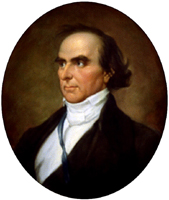
Memorable Actions
Daniel Webster resigned as President Tyler's Secretary of State because of Tyler's annexation of Texas--which annexation the Congress had rejected.


Sunday, February 28, 2010
Torture Memos
TORTURE MEMOS
2/28/2010
The primary philosophical characteristic of a Constitutional Republic is virtue. Virtue is doing the right thing because it is right-- not because it is easier, faster or more popular.
Do we ever learn, or more importantly, do the elected representatives of the people and their employees ever learn? Again, our country is facing a Constitutional “crisis” because top people in the Executive Branch of government chose to disregard that we are a nation of laws, and no one gets to choose which laws to honor. If the laws of the United States are not sufficient for today’s world, there are lawful procedures to enact new laws or amend the constitution. Those procedures are required, and not only when convenient.
In the days and weeks after 9-11 two former Justice Department lawyers, John Yoo, and Jay Bybee, pursuant to instructions from the Attorney General, authored, or authored in part, a series of documents, or drafts of documents, now known as the Torture Memos. These memos, written while Yoo and Bybee were employees of the Justice Department and Office of Legal Counsel (OLC) at the White House, resulted in a serious constitutional confrontation.
Yoo and Bybee are lawyers that had worked almost exclusively for government since leaving their law schools. That unfortunately has become all too common-- some lawyers go to work for the various departments of government after law school, and never work as a lawyer in the private sector. Many years ago, most lawyers that went to work for the government immediately after law school were those not offered a job in the private sector, or did not want to work the many hours required by the private sector. Now, however, for those who have aspirations for a political office or judicial appointment, the recognized “track” is to clerk for a (preferably) federal judge, then work as a government lawyer and at the same time become as active as permissible with one of the major political parties. Then, ingratiate yourself with the right people and hope for an impressive political, judicial or prosecutorial appointment–the latter allows you to utter the hallowed words—“I was tough on crime”. The problem with this “road to success” is the possible loss of independence as a lawyer. Your future depends on pleasing bosses that are also your clients. It would seem that the legislators and bureaucrats would have learned, in the aftermath of Watergate and Iran-Contra, that lawyers that work for government are not inclined to disagree with their client- bosses. It is naïve to think that all, or even most, lawyers will always do the right thing and tell the client what he needs to hear, even though he or she knows it is not what the client wants to hear. I suppose it is even more daunting when your client is the President or Vice President of the United States.
The Office of Legal Counsel (OLC) is a part of the Justice Department; their job is to keep the President and the Executive Department in compliance with the Constitution and Laws of the United States. Their lawyers work for the Attorney General and the President of the United States. Their future advancement depends on the perception that the AG and the President have of their work. Bybee was the direct superior of Yoo at the time of the drafting of the initial Torture Memo at the OLC.
The issue that the Attorney General gave them to address was whether the United States could resort to “enhanced interrogation techniques” to obtain information from persons captured, or “rounded up” in Afghanistan and Iraq. The stated goal was to gain information that may assist in preventing further attacks on our allies or us.
There was an immediate, strong difference of opinion at the White House regarding the conclusions in the Memo, favoring the enhanced techniques. However, and importantly, all the top military lawyers for each branch of the service were against employing the enhanced techniques. Those against let their superiors know that criminal prosecutions were possible against those that conducted or approved the questioned techniques. I can find no suggestion that any members of the Executive Branch or the attorneys approving the “enhanced techniques” offered to subject themselves to the “enhanced” process to help them evaluate whether the techniques amounted to “torture” as defined by them in the initial Memo. (A lawyer later to be in charge of the OLC did subject himself to a brief water boarding.)
I have no information about the content of the document giving Yoo and Bybee their instructions on the preparation of the Memo. That is, told to present argument for legitimizing the techniques or told to present the arguments for and against? If, the latter, I have not seen or heard of it---therefore I suspect it was the former. Was there pre- disclosure to the lawyers of the position taken by their superiors on what they wanted the conclusion(s) to be? Was the Memo intended to be an independent legal analysis or was it to give “cover” to those who were to engage in the techniques, if approved, or techniques that were already surreptitiously approved? Were they told to disregard the Geneva Conventions, Rome Statute and the United Nations Convention on Torture and to disregard the United States prosecution of members of the Japanese military for water boarding (although called water torture) in 1947? I doubt whether we will ever get answers to these many questions, absent a trial.
The underlying and mostly ignored question that needs an answer is why was there such an intense debate? Remember, we are addressing the issue of torture (the nomenclature is unimportant), and whether representatives of the United States may engage in torture. Is it truly conceivable that we Americans, or some of us, really believed that torture was, or is, an acceptable method to obtain information? If you were a school age child during World War II, you should remember how much hatred existed for the Japanese because of the reports of torture of American Servicemen. That hatred, in the USA, was universal---and to think that we now have a heated debate over legal meanings in order to coerce information, by recognized illegal mean-- is just not possible—at least to me.
Torture is not available no matter what anyone thinks may be sufficient justification. The UN Convention on Torture, signed and ratified by the United States says, “[n]o exceptional circumstances whatsoever, whether a state of war or a threat of war, internal political instability or any other public emergency, may be invoked as a justification for torture.”(Emphasis added) No “memo” can change that, no matter the author.
If the Executive wanted a truly independent analysis of the issues, and if he, or they, were aware of the competing claims and philosophies of those in government, why didn’t the Executive follow the lead of the private sector, when facing an issue with strong differing opinions, and get a highly qualified outside counsel, who had no financial association with government, and no desire for such association, (believe it or not, there are law firms that don’t crave government business) to provide an independent opinion letter?
It appears that many of the policymakers determined that personal safety is more important than the virtuous concepts employed in the founding of this country. Will we really jettison our virtue and our honor, then change or weaken our democracy for personal safety. Thankfully, the founders of this nation did not. They knew they were committing treasonous acts, and if the war for independence failed, they would have been hanging from a tree (alone or together). They chose virtue over safety----we must make similar decisions as a nation. I personally wish for virtue.
2/28/2010
The primary philosophical characteristic of a Constitutional Republic is virtue. Virtue is doing the right thing because it is right-- not because it is easier, faster or more popular.
Do we ever learn, or more importantly, do the elected representatives of the people and their employees ever learn? Again, our country is facing a Constitutional “crisis” because top people in the Executive Branch of government chose to disregard that we are a nation of laws, and no one gets to choose which laws to honor. If the laws of the United States are not sufficient for today’s world, there are lawful procedures to enact new laws or amend the constitution. Those procedures are required, and not only when convenient.
In the days and weeks after 9-11 two former Justice Department lawyers, John Yoo, and Jay Bybee, pursuant to instructions from the Attorney General, authored, or authored in part, a series of documents, or drafts of documents, now known as the Torture Memos. These memos, written while Yoo and Bybee were employees of the Justice Department and Office of Legal Counsel (OLC) at the White House, resulted in a serious constitutional confrontation.
Yoo and Bybee are lawyers that had worked almost exclusively for government since leaving their law schools. That unfortunately has become all too common-- some lawyers go to work for the various departments of government after law school, and never work as a lawyer in the private sector. Many years ago, most lawyers that went to work for the government immediately after law school were those not offered a job in the private sector, or did not want to work the many hours required by the private sector. Now, however, for those who have aspirations for a political office or judicial appointment, the recognized “track” is to clerk for a (preferably) federal judge, then work as a government lawyer and at the same time become as active as permissible with one of the major political parties. Then, ingratiate yourself with the right people and hope for an impressive political, judicial or prosecutorial appointment–the latter allows you to utter the hallowed words—“I was tough on crime”. The problem with this “road to success” is the possible loss of independence as a lawyer. Your future depends on pleasing bosses that are also your clients. It would seem that the legislators and bureaucrats would have learned, in the aftermath of Watergate and Iran-Contra, that lawyers that work for government are not inclined to disagree with their client- bosses. It is naïve to think that all, or even most, lawyers will always do the right thing and tell the client what he needs to hear, even though he or she knows it is not what the client wants to hear. I suppose it is even more daunting when your client is the President or Vice President of the United States.
The Office of Legal Counsel (OLC) is a part of the Justice Department; their job is to keep the President and the Executive Department in compliance with the Constitution and Laws of the United States. Their lawyers work for the Attorney General and the President of the United States. Their future advancement depends on the perception that the AG and the President have of their work. Bybee was the direct superior of Yoo at the time of the drafting of the initial Torture Memo at the OLC.
The issue that the Attorney General gave them to address was whether the United States could resort to “enhanced interrogation techniques” to obtain information from persons captured, or “rounded up” in Afghanistan and Iraq. The stated goal was to gain information that may assist in preventing further attacks on our allies or us.
There was an immediate, strong difference of opinion at the White House regarding the conclusions in the Memo, favoring the enhanced techniques. However, and importantly, all the top military lawyers for each branch of the service were against employing the enhanced techniques. Those against let their superiors know that criminal prosecutions were possible against those that conducted or approved the questioned techniques. I can find no suggestion that any members of the Executive Branch or the attorneys approving the “enhanced techniques” offered to subject themselves to the “enhanced” process to help them evaluate whether the techniques amounted to “torture” as defined by them in the initial Memo. (A lawyer later to be in charge of the OLC did subject himself to a brief water boarding.)
I have no information about the content of the document giving Yoo and Bybee their instructions on the preparation of the Memo. That is, told to present argument for legitimizing the techniques or told to present the arguments for and against? If, the latter, I have not seen or heard of it---therefore I suspect it was the former. Was there pre- disclosure to the lawyers of the position taken by their superiors on what they wanted the conclusion(s) to be? Was the Memo intended to be an independent legal analysis or was it to give “cover” to those who were to engage in the techniques, if approved, or techniques that were already surreptitiously approved? Were they told to disregard the Geneva Conventions, Rome Statute and the United Nations Convention on Torture and to disregard the United States prosecution of members of the Japanese military for water boarding (although called water torture) in 1947? I doubt whether we will ever get answers to these many questions, absent a trial.
The underlying and mostly ignored question that needs an answer is why was there such an intense debate? Remember, we are addressing the issue of torture (the nomenclature is unimportant), and whether representatives of the United States may engage in torture. Is it truly conceivable that we Americans, or some of us, really believed that torture was, or is, an acceptable method to obtain information? If you were a school age child during World War II, you should remember how much hatred existed for the Japanese because of the reports of torture of American Servicemen. That hatred, in the USA, was universal---and to think that we now have a heated debate over legal meanings in order to coerce information, by recognized illegal mean-- is just not possible—at least to me.
Torture is not available no matter what anyone thinks may be sufficient justification. The UN Convention on Torture, signed and ratified by the United States says, “[n]o exceptional circumstances whatsoever, whether a state of war or a threat of war, internal political instability or any other public emergency, may be invoked as a justification for torture.”(Emphasis added) No “memo” can change that, no matter the author.
If the Executive wanted a truly independent analysis of the issues, and if he, or they, were aware of the competing claims and philosophies of those in government, why didn’t the Executive follow the lead of the private sector, when facing an issue with strong differing opinions, and get a highly qualified outside counsel, who had no financial association with government, and no desire for such association, (believe it or not, there are law firms that don’t crave government business) to provide an independent opinion letter?
It appears that many of the policymakers determined that personal safety is more important than the virtuous concepts employed in the founding of this country. Will we really jettison our virtue and our honor, then change or weaken our democracy for personal safety. Thankfully, the founders of this nation did not. They knew they were committing treasonous acts, and if the war for independence failed, they would have been hanging from a tree (alone or together). They chose virtue over safety----we must make similar decisions as a nation. I personally wish for virtue.
Monday, February 15, 2010
my sayings
In matters of morality and ethics, do not expect more of others than you expect of yourself.
Wednesday, February 10, 2010
Challenge---Terrorist Trials
Terrorism Trials and the Constitution
“Everyone has the right to speak, but you must earn the right to be heard”.
Howard, my friend, you have more than earned that right. When I read your “musings”, I do not always agree completely , but I always give careful thought, not only because you have “earned” the right to have your words carefully considered, but because of our friendship and my profound respect for your great contributions. That said—here is a brief memo on my ideas respecting the potential terrorist trials in the United States Federal District Courts. This memo is, at least in part, based on trial experience of over forty years in the California trial and appellate courts, both state and federal.
In the last week, confusion again reigns on the anticipated location for the trial(s). Mayor Bloomberg, alas, has proclaimed, ipse dixit*, “[N]ot in my backyard.”
In doing my research for this memo, I discovered many writings discussing the many issues involving the detainee cases. Many commentators make bold proclamations that the U.S. District Courts can well handle the trials, and foresee no serious difficulties; others, the opposite. However, I find no proclamations from trial lawyers, who, after all, will have to try these cases. There is no recognition (that I found) of the myriad difficulties and surprises that always arise in major litigation where there are established rules of procedure, contrary to the detainee cases where so little guidance exists. Those surprises can cause some real “heartburn” as well as profound embarrassment.
We have only one US Constitution, we have one set of rules that define and control the conduct of criminal trials in the United States District Courts: the Federal Rules of Criminal Procedure. Those Rules, inter alia**, govern the trials, in the United States District Courts of persons accused of federal crimes. They are promulgated foundationally from Article III of the Constitution, and the Fourth, Fifth and Sixth Amendments to the Constitution (the Bill of Rights). In those Amendments providing for the rights of accused, their efficacy is not limited to American Citizens or others in the country lawfully; the rights extend to all “persons”. For example, words found in the Fourth Amendment: “The right of the people to be secure…” in the Fifth Amendment: “No person shall be compelled ...nor be deprived of life, liberty or property…” and in the Sixth Amendment: “In all criminal prosecutions the accused is…” It therefore follows that once the Guantanamo detainees are in the United States criminal justice system, the guarantees of the Constitution attach--no matter how repugnant that may seem to the American people.
The purity of the law when it works the way the framers contemplated at the time of the ratification of the Constitution is truly magnificent. But, did the framers contemplate terrorists, or terrorists flying airplanes into buildings in New York City? I doubt it, but I do think they contemplated trials of non-citizens for criminal conduct. Illustrating that intent is the 18th century trial of the British soldiers for the killings of American men and boys in the so-called “Boston Massacre”. One of the founders, John Adams, defended the British soldiers, and all were acquitted--a very unpopular decision at the time. An example that “hard cases can make bad law”, but not in the “Boston” instance.
Interesting conflicts exist because of the dichotomy of belligerent versus criminal defendant. This dichotomy may prove a major impediment to securing convictions in the federal courts. What the government can do to obtain information with respect to a prisoner of war is much broader then what government is allowed to do in the appropriate processing of a criminal defendant in a civilian court.
Frequently, President George W. Bush commented: “his primary responsibility as the President was to protect the American people”, or words to that effect. It was, and is, a popular statement, and probably received mass approval. However, what form should the protection take? The Presidential oath of office, does not include an express phrase “to protect the American people”, however, the oath does contain the phrase, “preserve and protect the Constitution of the United States”. Which raises the question: Does the preservation and protection of the Constitution provide the best assurance for protection of the American People? Is it an appropriate function of the government to violate (at worst), or disregard, (at best), the Constitution to solve an immediate, anticipated and widespread catastrophe? The consequences of “skirting” the Constitution (if the Federal Courts allow such) is that the disregard of the Constitution may have a profound and long lasting impact on the continued viability of this most hallowed document. We cannot have a constitution
of convenience.
The detainee cases conducted in the US District Courts can become important precedents. That is, the law set forth by the court in these cases, arguably, could justify the same or similar results in other cases. For example, if the court admits confessions obtained by coercion, coerced confessions in cases not involving terrorism could follow. However, what do we do? If, in the opinion of some government employee(s), a person has information that may prevent a catastrophic attack on this country, and that employee honestly feels the only way to get the information is to resort to “enhanced interrogation techniques” (whatever that means) which techniques violate the mandates of the Bill of Rights, should it be permissible to disregard the Constitution because of the urgency of the situation? My inclination as a trial lawyer is to say “NO”—but, admittedly, I may be very wrong. I dislike the use of trite clichés, but the phrase “slippery slope” comes to mind.
If a police officer honestly believes, a person knows the location of a kidnapped child and refuses to disclose the child’s whereabouts, can the officer resort to illegal coercion? Many would argue for permissibility, but certainly, any evidence gained by wrongful coercion is excludable, as the law now exists. In addition, criminal prosecution of the police officer would likely follow. Philosophical dilemma----right and wrong—Kant’s categorical imperative might provide the answer.
If these detainee cases proceed to trial in the U.S. District Courts, there is little doubt the defendants will allege violations of their Constitutional rights, as defenses. Those defenses take on enhanced significance if the prosecutor attempts to introduce evidence against the defendant that the government obtained improperly. If the prosecutor has independent (of the defendant) evidence sufficient to convict, and foregoes offering the tainted evidence at trial, the Constitutional defenses may not be relevant. However, judging by the results of the forty detainee habeas corpus cases heard in the Federal District Courts, most of the independent evidence against the defendants was very weak, indeed. Of the forty cases, approximately thirty were “won” by the detainees and the remaining “won” by the government. The courts commented publicly on the weaknesses in some of the government cases. Why so weak?-I have no idea. In addition, I have no idea why the government has only appealed two of the adverse decisions. The most logical conclusion (to a lawyer) is that the decisions are not reversible on appeal.
The rights guaranteed to a criminal defendant which are not available to a prisoner of war or other military detainee are many, including: (1) probable cause for detention—part of the governments burden in a criminal case is to prove that there was probable cause to believe that the defendant was engaged in criminal conduct when originally confronted by the government representatives; (2)Miranda warnings--- once the police investigation focuses on an individual, he or she must be given the Miranda warnings before any interrogation can commence or continue; (3)right to an attorney-- an attorney must be provided, if requested by the defendant, before any questioning can commence or continue; (4) speedy, public trial-- the defendant has the right to a speedy and public jury trial; and (5) right of confrontation-- defendant has the right to confront and cross-examine the witnesses against him.
Probable Cause for Detention: In a war context, no probable cause is necessary to detain persons, place them into a holding facility until the end of hostilities, and then return them to their own country once hostilities terminate. In a civilian court, the prosecution must prove probable cause to believe the defendants were engaged in criminal activity. Merely being present, geographically, is generally not sufficient. If the court determines that no probable cause existed for the initial detention, release would (probably) follow. (I make no determination about the action, or inaction, on the part of the INS.)
If defendants assert, and prove, violations of the Geneva Conventions, those violations could establish a lack of probable cause to detain, prove embarrassing to the government, and result in dismissal of charges.
The Geneva Conventions presume that any prisoner or detainee is entitled to the protections of the Conventions. The right to protected status can be adversely determined only at a hearing before “a competent tribunal”. That did not happen at Guantanamo, or elsewhere. Article 5 of the Convention provides, “…should any doubt arise as to whether persons, having committed a belligerent act and having fallen into the hands of the enemy, belong to any of the categories enumerated in Article Four, such persons shall enjoy the protection of the present Convention until such time as their status has been determined by a competent tribunal.”(Emphasis added) It is not sufficient for the Executive Branch to proclaim that persons are “unlawful combatants”.
Failure to provide “Miranda” warnings: No Miranda warnings are required for prisoners of war. The Law of War***, The Law of Nations and the Geneva Conventions, provide rules and procedures for interrogations of prisoners of war. Under normal, circumstances, no prosecutions occur for being a participant in a war.
Miranda warnings are impediments to government obtaining evidence that constitutes self-incrimination. Evidence is normally excluded which is obtained through wrongful coercion. The courts now admit evidence, other than confessions, gained from purely voluntary statements even if no Miranda warnings are given. However, that is a new departure from what had become settled “Miranda law”, and could revert at any time depending on the next appointment to the Supreme Court.
In the detainee cases, the dichotomy of prisoner of war versus accused criminal is very apparent. As a prisoner of war, the detainee can be questioned free of constitutional burdens. However, once government changes the detainee status to that of an accused the detainee is cloaked with the guarantees of the Bill of Rights. The issue then becomes, when do the rights attach-- ab initio**** or with the change of status?
There is no uniformity of opinion on this critical question. If the rights attach when the status is changed, then the detainee questioning, even if coerced, may not necessarily result in the exclusion of evidence. If, however, the court determines that once the status is changed, the prior interrogation is subject to the Bill of Rights, the exclusion of all evidence from the time of the original questioning is probable, if there was no Miranda warning, a fortiori***** , if coercion existed. The other, and possibly best, option is for the court to rule that status changes when the government had reasonable cause to believe that the detainee had committed a crime and not an act of war, and intends to pursue criminal prosecution. An immediate admonition per Miranda should then be given, and all coercion and questioning should cease. The admissibility of the evidence obtained should then be determined by an examination of the methods used to obtain the evidence--if coerced it should be inadmissible—admissible, if voluntary.
Right to an Attorney: If this country is truly a republic, and we, therefore, abide by the rule of law, then no question should exist as to the right to an attorney when a person accused of crime is in the custody of our government. It seems reasonable (to me) that the government officials must make an election, between prisoner of war and criminal defendant. If held as a prisoner of war, then the Geneva Conventions apply. If held as a criminal defendant, the constitutional guarantees apply, including the right to an attorney.
The Right to a Speedy and Public Trial and the Right of Confrontation: Security is a primary concern of the Government if cases proceed to trial in a public forum as mandated by the Constitution. It is commonplace for detainees accused of crime to threaten disclosure of classified information if they are prosecuted (gray mail). Dismissals of prosecutions are frequently the result of such threats, which result in the release of persons potentially dangerous to the security of the United States. To combat the threat of gray mail, Congress enacted the Classified Information Protective Act (CIPA) in 1980.
CIPA, in brief, provided for a system to submit substitute evidence rather than classified information. In order for the court to allow such substitution the judge must assure that the substitution does not impair the defendant’s legitimate defenses. This concept gives a trial lawyer pause---how do you cross examine substitutes.
A secondary concern of the Government is the trial becoming a spectacle. The enemies of the United States will frequently do all they can to embarrass the government. Protection of the agents and representatives of government against danger or harm is vital. The
Federal District Court judges are uniformly competent to manage their courtrooms. They have the arsenal to assure proper decorum. If a defendant becomes overly aggressive, the court can have the defendant removed from the courtroom, and placed in seclusion to watch the proceedings on television. In addition, they can be bound and gagged to prevent disruption. My personal concern is not whether the US courts can try these defendants in a manner acceptable to the US citizens, but whether the US Courts should try these defendants, if universal acceptance of the results is a goal.
If a contrary state of affairs should exist, and captured Americans are tried and found guilty by courts in Iraq or Afghanistan, would Americans accept the verdict no matter how fair the trial? I think not.
There are other options for terrorist trials. A suggestion has been made to establish a “national security” court, in which all judges, lawyers and court personnel have the appropriate security clearances to handle and review classified documents. If a new court is established the Congress will need to create a body of law, which provides the rules of procedure as well as safeguards to assure the protection of classified information. The lawyers that defend those accused must be truly independent, bright, well respected, and with abundant jury trial experience. They cannot be government employees, nor should the government select the defense lawyers.
The United States should also rethink their position on the International Criminal Court (ICC) founded in 2002, located in The Hague, Netherlands. There are now 110 countries signed on to the Rome Statute, which is the enabling statute for the creation of the ICC. Admittedly, the ICC has no jurisdiction for crimes committed before July 1, 2002; therefore, no jurisdiction for pre-9/11 criminal activities exists. However, for all serious international criminal acts thereafter, the court could entertain jurisdiction. The judges and lawyers assigned to this court are outstanding, with credentials that equal or exceed most judges and trial lawyers in the United States. However, to proceed before an international tribunal requires a change of thinking by many of our leaders, including their assumption that any courts, except United States courts, will be unfair. I feel the true impediment to our membership in the ICC is the fear that it will not succumb to the dictates of the United States. The United States withdrew from the International Court of Justice, also known as the World Court, in 1986 at the insistence of President Reagan, when Nicaragua prevailed in a suit against the United States. Withdrawal from the ICC occurred in 2002 at the insistence of President George W. Bush. These stories however, are for another day.
The United States must exercise due diligence as well as caution in their approach to these cases. The wrong decisions can result in additional hostilities directed at our country, and a further loss of respect among our allies. I am hopeful that the Executive Branch is not bringing these cases, knowing that because of the inappropriate conduct of government representatives, many will be dismissed -- then letting the courts take the “heat” (which is not uncommon), rather than the Executive Branch employees accepting the responsibility for their own decisions.
END NOTES:
* Something asserted but not proved.
** Among other things.
*** “The study of law is largely the study of history. The law of war is not different. Its history is one of repeated efforts to impose legal constraints on armed conflict by negotiations among military powers. Often those efforts failed to produce a treaty; the treaties that were produced were often less than fully effective. Over time, however, they have produced, along with other sources, a body of law recognized as binding and effective by most of the major military powers.” For those seeking more information I recommend Howard, Andreopolous & Shulman, The Laws of War, Yale Univ. Press (1997)
**** From the beginning.
***** By the stronger reasoning.
“Everyone has the right to speak, but you must earn the right to be heard”.
Howard, my friend, you have more than earned that right. When I read your “musings”, I do not always agree completely , but I always give careful thought, not only because you have “earned” the right to have your words carefully considered, but because of our friendship and my profound respect for your great contributions. That said—here is a brief memo on my ideas respecting the potential terrorist trials in the United States Federal District Courts. This memo is, at least in part, based on trial experience of over forty years in the California trial and appellate courts, both state and federal.
In the last week, confusion again reigns on the anticipated location for the trial(s). Mayor Bloomberg, alas, has proclaimed, ipse dixit*, “[N]ot in my backyard.”
In doing my research for this memo, I discovered many writings discussing the many issues involving the detainee cases. Many commentators make bold proclamations that the U.S. District Courts can well handle the trials, and foresee no serious difficulties; others, the opposite. However, I find no proclamations from trial lawyers, who, after all, will have to try these cases. There is no recognition (that I found) of the myriad difficulties and surprises that always arise in major litigation where there are established rules of procedure, contrary to the detainee cases where so little guidance exists. Those surprises can cause some real “heartburn” as well as profound embarrassment.
We have only one US Constitution, we have one set of rules that define and control the conduct of criminal trials in the United States District Courts: the Federal Rules of Criminal Procedure. Those Rules, inter alia**, govern the trials, in the United States District Courts of persons accused of federal crimes. They are promulgated foundationally from Article III of the Constitution, and the Fourth, Fifth and Sixth Amendments to the Constitution (the Bill of Rights). In those Amendments providing for the rights of accused, their efficacy is not limited to American Citizens or others in the country lawfully; the rights extend to all “persons”. For example, words found in the Fourth Amendment: “The right of the people to be secure…” in the Fifth Amendment: “No person shall be compelled ...nor be deprived of life, liberty or property…” and in the Sixth Amendment: “In all criminal prosecutions the accused is…” It therefore follows that once the Guantanamo detainees are in the United States criminal justice system, the guarantees of the Constitution attach--no matter how repugnant that may seem to the American people.
The purity of the law when it works the way the framers contemplated at the time of the ratification of the Constitution is truly magnificent. But, did the framers contemplate terrorists, or terrorists flying airplanes into buildings in New York City? I doubt it, but I do think they contemplated trials of non-citizens for criminal conduct. Illustrating that intent is the 18th century trial of the British soldiers for the killings of American men and boys in the so-called “Boston Massacre”. One of the founders, John Adams, defended the British soldiers, and all were acquitted--a very unpopular decision at the time. An example that “hard cases can make bad law”, but not in the “Boston” instance.
Interesting conflicts exist because of the dichotomy of belligerent versus criminal defendant. This dichotomy may prove a major impediment to securing convictions in the federal courts. What the government can do to obtain information with respect to a prisoner of war is much broader then what government is allowed to do in the appropriate processing of a criminal defendant in a civilian court.
Frequently, President George W. Bush commented: “his primary responsibility as the President was to protect the American people”, or words to that effect. It was, and is, a popular statement, and probably received mass approval. However, what form should the protection take? The Presidential oath of office, does not include an express phrase “to protect the American people”, however, the oath does contain the phrase, “preserve and protect the Constitution of the United States”. Which raises the question: Does the preservation and protection of the Constitution provide the best assurance for protection of the American People? Is it an appropriate function of the government to violate (at worst), or disregard, (at best), the Constitution to solve an immediate, anticipated and widespread catastrophe? The consequences of “skirting” the Constitution (if the Federal Courts allow such) is that the disregard of the Constitution may have a profound and long lasting impact on the continued viability of this most hallowed document. We cannot have a constitution
of convenience.
The detainee cases conducted in the US District Courts can become important precedents. That is, the law set forth by the court in these cases, arguably, could justify the same or similar results in other cases. For example, if the court admits confessions obtained by coercion, coerced confessions in cases not involving terrorism could follow. However, what do we do? If, in the opinion of some government employee(s), a person has information that may prevent a catastrophic attack on this country, and that employee honestly feels the only way to get the information is to resort to “enhanced interrogation techniques” (whatever that means) which techniques violate the mandates of the Bill of Rights, should it be permissible to disregard the Constitution because of the urgency of the situation? My inclination as a trial lawyer is to say “NO”—but, admittedly, I may be very wrong. I dislike the use of trite clichés, but the phrase “slippery slope” comes to mind.
If a police officer honestly believes, a person knows the location of a kidnapped child and refuses to disclose the child’s whereabouts, can the officer resort to illegal coercion? Many would argue for permissibility, but certainly, any evidence gained by wrongful coercion is excludable, as the law now exists. In addition, criminal prosecution of the police officer would likely follow. Philosophical dilemma----right and wrong—Kant’s categorical imperative might provide the answer.
If these detainee cases proceed to trial in the U.S. District Courts, there is little doubt the defendants will allege violations of their Constitutional rights, as defenses. Those defenses take on enhanced significance if the prosecutor attempts to introduce evidence against the defendant that the government obtained improperly. If the prosecutor has independent (of the defendant) evidence sufficient to convict, and foregoes offering the tainted evidence at trial, the Constitutional defenses may not be relevant. However, judging by the results of the forty detainee habeas corpus cases heard in the Federal District Courts, most of the independent evidence against the defendants was very weak, indeed. Of the forty cases, approximately thirty were “won” by the detainees and the remaining “won” by the government. The courts commented publicly on the weaknesses in some of the government cases. Why so weak?-I have no idea. In addition, I have no idea why the government has only appealed two of the adverse decisions. The most logical conclusion (to a lawyer) is that the decisions are not reversible on appeal.
The rights guaranteed to a criminal defendant which are not available to a prisoner of war or other military detainee are many, including: (1) probable cause for detention—part of the governments burden in a criminal case is to prove that there was probable cause to believe that the defendant was engaged in criminal conduct when originally confronted by the government representatives; (2)Miranda warnings--- once the police investigation focuses on an individual, he or she must be given the Miranda warnings before any interrogation can commence or continue; (3)right to an attorney-- an attorney must be provided, if requested by the defendant, before any questioning can commence or continue; (4) speedy, public trial-- the defendant has the right to a speedy and public jury trial; and (5) right of confrontation-- defendant has the right to confront and cross-examine the witnesses against him.
Probable Cause for Detention: In a war context, no probable cause is necessary to detain persons, place them into a holding facility until the end of hostilities, and then return them to their own country once hostilities terminate. In a civilian court, the prosecution must prove probable cause to believe the defendants were engaged in criminal activity. Merely being present, geographically, is generally not sufficient. If the court determines that no probable cause existed for the initial detention, release would (probably) follow. (I make no determination about the action, or inaction, on the part of the INS.)
If defendants assert, and prove, violations of the Geneva Conventions, those violations could establish a lack of probable cause to detain, prove embarrassing to the government, and result in dismissal of charges.
The Geneva Conventions presume that any prisoner or detainee is entitled to the protections of the Conventions. The right to protected status can be adversely determined only at a hearing before “a competent tribunal”. That did not happen at Guantanamo, or elsewhere. Article 5 of the Convention provides, “…should any doubt arise as to whether persons, having committed a belligerent act and having fallen into the hands of the enemy, belong to any of the categories enumerated in Article Four, such persons shall enjoy the protection of the present Convention until such time as their status has been determined by a competent tribunal.”(Emphasis added) It is not sufficient for the Executive Branch to proclaim that persons are “unlawful combatants”.
Failure to provide “Miranda” warnings: No Miranda warnings are required for prisoners of war. The Law of War***, The Law of Nations and the Geneva Conventions, provide rules and procedures for interrogations of prisoners of war. Under normal, circumstances, no prosecutions occur for being a participant in a war.
Miranda warnings are impediments to government obtaining evidence that constitutes self-incrimination. Evidence is normally excluded which is obtained through wrongful coercion. The courts now admit evidence, other than confessions, gained from purely voluntary statements even if no Miranda warnings are given. However, that is a new departure from what had become settled “Miranda law”, and could revert at any time depending on the next appointment to the Supreme Court.
In the detainee cases, the dichotomy of prisoner of war versus accused criminal is very apparent. As a prisoner of war, the detainee can be questioned free of constitutional burdens. However, once government changes the detainee status to that of an accused the detainee is cloaked with the guarantees of the Bill of Rights. The issue then becomes, when do the rights attach-- ab initio**** or with the change of status?
There is no uniformity of opinion on this critical question. If the rights attach when the status is changed, then the detainee questioning, even if coerced, may not necessarily result in the exclusion of evidence. If, however, the court determines that once the status is changed, the prior interrogation is subject to the Bill of Rights, the exclusion of all evidence from the time of the original questioning is probable, if there was no Miranda warning, a fortiori***** , if coercion existed. The other, and possibly best, option is for the court to rule that status changes when the government had reasonable cause to believe that the detainee had committed a crime and not an act of war, and intends to pursue criminal prosecution. An immediate admonition per Miranda should then be given, and all coercion and questioning should cease. The admissibility of the evidence obtained should then be determined by an examination of the methods used to obtain the evidence--if coerced it should be inadmissible—admissible, if voluntary.
Right to an Attorney: If this country is truly a republic, and we, therefore, abide by the rule of law, then no question should exist as to the right to an attorney when a person accused of crime is in the custody of our government. It seems reasonable (to me) that the government officials must make an election, between prisoner of war and criminal defendant. If held as a prisoner of war, then the Geneva Conventions apply. If held as a criminal defendant, the constitutional guarantees apply, including the right to an attorney.
The Right to a Speedy and Public Trial and the Right of Confrontation: Security is a primary concern of the Government if cases proceed to trial in a public forum as mandated by the Constitution. It is commonplace for detainees accused of crime to threaten disclosure of classified information if they are prosecuted (gray mail). Dismissals of prosecutions are frequently the result of such threats, which result in the release of persons potentially dangerous to the security of the United States. To combat the threat of gray mail, Congress enacted the Classified Information Protective Act (CIPA) in 1980.
CIPA, in brief, provided for a system to submit substitute evidence rather than classified information. In order for the court to allow such substitution the judge must assure that the substitution does not impair the defendant’s legitimate defenses. This concept gives a trial lawyer pause---how do you cross examine substitutes.
A secondary concern of the Government is the trial becoming a spectacle. The enemies of the United States will frequently do all they can to embarrass the government. Protection of the agents and representatives of government against danger or harm is vital. The
Federal District Court judges are uniformly competent to manage their courtrooms. They have the arsenal to assure proper decorum. If a defendant becomes overly aggressive, the court can have the defendant removed from the courtroom, and placed in seclusion to watch the proceedings on television. In addition, they can be bound and gagged to prevent disruption. My personal concern is not whether the US courts can try these defendants in a manner acceptable to the US citizens, but whether the US Courts should try these defendants, if universal acceptance of the results is a goal.
If a contrary state of affairs should exist, and captured Americans are tried and found guilty by courts in Iraq or Afghanistan, would Americans accept the verdict no matter how fair the trial? I think not.
There are other options for terrorist trials. A suggestion has been made to establish a “national security” court, in which all judges, lawyers and court personnel have the appropriate security clearances to handle and review classified documents. If a new court is established the Congress will need to create a body of law, which provides the rules of procedure as well as safeguards to assure the protection of classified information. The lawyers that defend those accused must be truly independent, bright, well respected, and with abundant jury trial experience. They cannot be government employees, nor should the government select the defense lawyers.
The United States should also rethink their position on the International Criminal Court (ICC) founded in 2002, located in The Hague, Netherlands. There are now 110 countries signed on to the Rome Statute, which is the enabling statute for the creation of the ICC. Admittedly, the ICC has no jurisdiction for crimes committed before July 1, 2002; therefore, no jurisdiction for pre-9/11 criminal activities exists. However, for all serious international criminal acts thereafter, the court could entertain jurisdiction. The judges and lawyers assigned to this court are outstanding, with credentials that equal or exceed most judges and trial lawyers in the United States. However, to proceed before an international tribunal requires a change of thinking by many of our leaders, including their assumption that any courts, except United States courts, will be unfair. I feel the true impediment to our membership in the ICC is the fear that it will not succumb to the dictates of the United States. The United States withdrew from the International Court of Justice, also known as the World Court, in 1986 at the insistence of President Reagan, when Nicaragua prevailed in a suit against the United States. Withdrawal from the ICC occurred in 2002 at the insistence of President George W. Bush. These stories however, are for another day.
The United States must exercise due diligence as well as caution in their approach to these cases. The wrong decisions can result in additional hostilities directed at our country, and a further loss of respect among our allies. I am hopeful that the Executive Branch is not bringing these cases, knowing that because of the inappropriate conduct of government representatives, many will be dismissed -- then letting the courts take the “heat” (which is not uncommon), rather than the Executive Branch employees accepting the responsibility for their own decisions.
END NOTES:
* Something asserted but not proved.
** Among other things.
*** “The study of law is largely the study of history. The law of war is not different. Its history is one of repeated efforts to impose legal constraints on armed conflict by negotiations among military powers. Often those efforts failed to produce a treaty; the treaties that were produced were often less than fully effective. Over time, however, they have produced, along with other sources, a body of law recognized as binding and effective by most of the major military powers.” For those seeking more information I recommend Howard, Andreopolous & Shulman, The Laws of War, Yale Univ. Press (1997)
**** From the beginning.
***** By the stronger reasoning.
Friday, February 5, 2010
Saturday, January 23, 2010
Everyday
Beware of the rising tide of mediocrity.
Everyone has the right to speak, but you must earn the right to be heard.
Everyone has the right to speak, but you must earn the right to be heard.
Subscribe to:
Posts (Atom)


